
Stop guessing your hydration.
Start racing smarter.
A sweat test at Vision Quest Coaching measures your personal sodium loss rate, so you can build a hydration plan around your actual body chemistry — not a generic sports-drink label. If cramping, GI distress, or late-race fog has shown up in your long efforts, hydration is likely the missing variable.

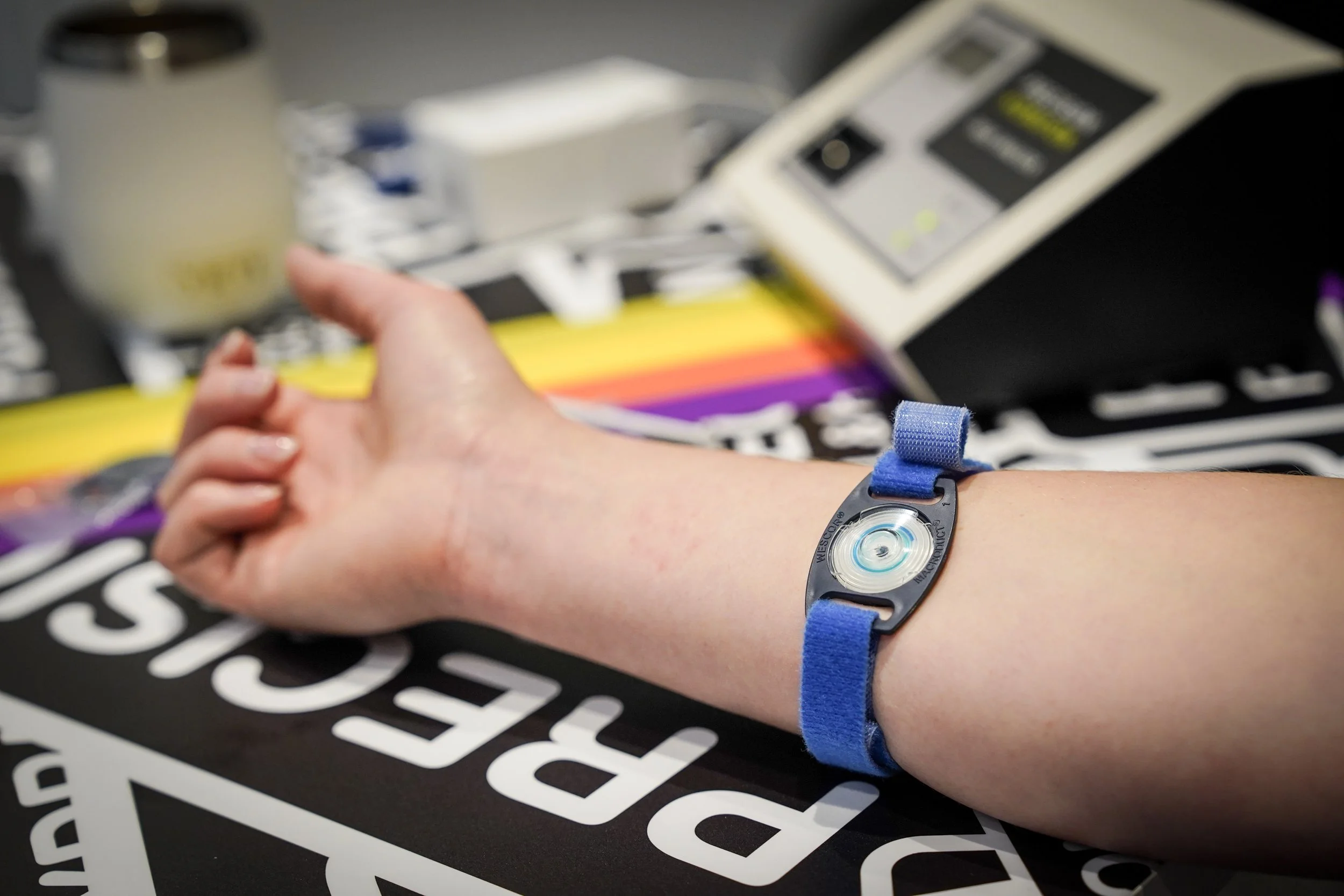
A sweat test measures the sodium concentration in your sweat — your personal electrolyte loss rate during exercise. That number varies dramatically from athlete to athlete, and it's the foundation of a hydration strategy built for you rather than for a population average. It comes in two forms: a passive test that measures sodium loss on its own, and an active test that adds your sweat rate for a complete picture. Both are non-invasive, and the full session takes 45–60 minutes.
Sodium loss matters more than most athletes realize
Most athletes know they should drink during long efforts. Fewer understand that what you drink matters as much as how much, and that the right answer varies significantly from person to person.
Sodium is the primary electrolyte you lose through sweat. It's central to fluid balance, muscle function, and nerve signaling. When you lose more than you replace over a long session or race, the effects build gradually — and then hit hard. Cramping is the obvious sign, but sodium depletion shows up in other ways too:
- GI distress — bloating, sloshing, bathroom emergencies
- Dizziness and headaches during or after long efforts
- A sharp, unexplained drop in power or pace late in the day
- That wiped-out feeling that lingers into the next day, even after good sleep and food

Follow the same hydration protocol and you get very different outcomes. A sweat test removes the guesswork by telling you exactly where you fall on that spectrum.
What a sweat test actually involves
There are two parts to the equation — sodium loss and sweat rate. Measuring sodium loss on its own is straightforward and takes less than an hour from start to finish.
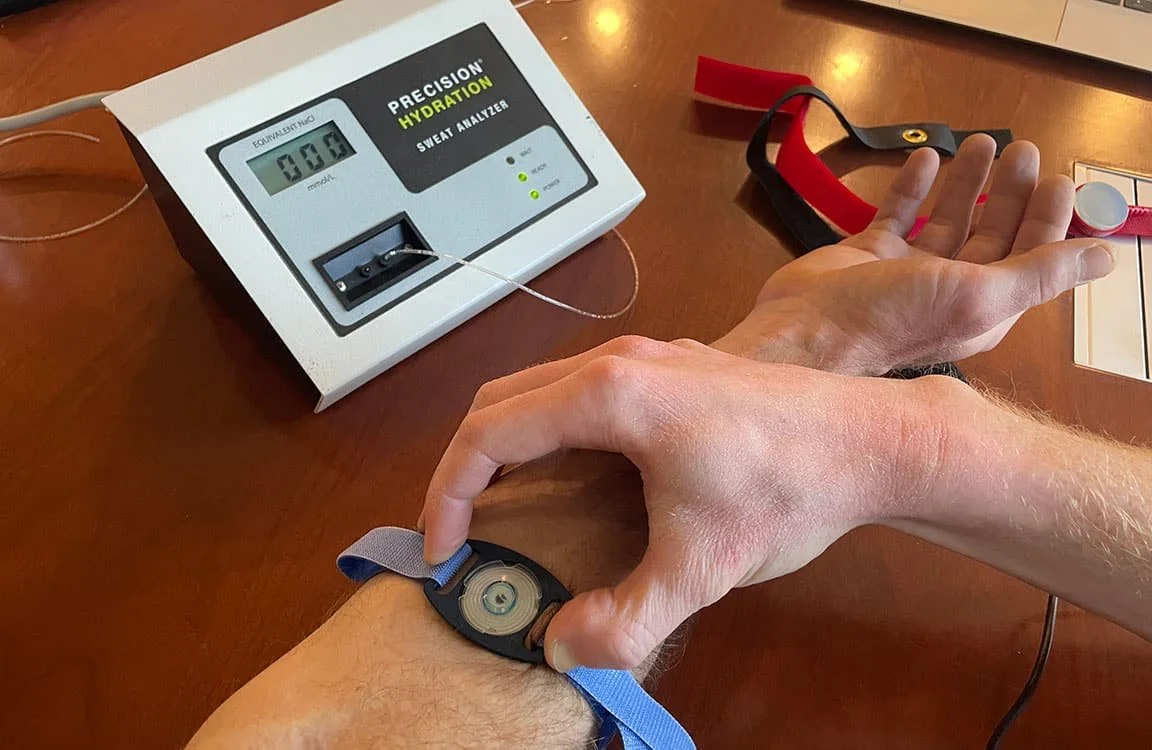
A short conversation
We start by talking through your training background, race history, current hydration habits, and any specific issues you've noticed — cramping patterns, GI problems during long efforts. This context helps us interpret your results accurately and build a plan that fits your actual race calendar.
The test itself
A small sensor placed on your skin gently stimulates a localized sweat response and collects the sweat for analysis. It's non-invasive and comfortable. There's no treadmill, no hard effort, and nothing that feels like a workout.
Your results, in plain language
Your coach sits with you and walks through your sodium concentration number and what it means for your training and racing. You leave with a clear starting point for sodium intake per hour, a fluid range for your sport and event duration, product-type guidance, and a practical plan to refine before race day.
Passive or active
Choose based on how complete a picture you want. Both start from the same sodium measurement — the active test adds your sweat rate so we can dial in fluid volume, not just electrolytes.
Sodium only
Measures your sodium concentration on its own, using a small skin sensor. No effort required — nothing that feels like a workout.
- Your personal sodium loss rate
- A starting sodium target per hour
- Product-type guidance for your number
Best for: athletes who mainly need to solve cramping and get their electrolyte balance right.
Sodium + sweat loss
Everything in the passive test, plus your sweat rate — measured by weighing you before and after 30–60 minutes of moderate effort on the bike or treadmill.
- Everything in the passive test
- How much fluid you lose per hour
- A complete fluid + sodium hydration plan
Best for: athletes building a full race-day plan where fluid volume matters as much as sodium.
Why generic hydration advice falls short
Sports-drink labels and general guidelines are built on population averages. Your individual needs may be far higher or lower.
| Sweat test (passive or active) | Generic sports-drink guidance | |
|---|---|---|
| Based on | Your measured sodium loss rate | Population averages |
| Sodium target | Personalized mg per hour | One number for everyone |
| Fluid plan | Matched to your sport, duration & conditions | Broad "drink to thirst" advice |
| Accounts for individual variation | Yes — 400mg to 1,500mg+ per liter | No |
| Coach interpretation | One-on-one results review & ongoing refinement | None |
| Common failure it addresses | Late-race cramping, GI distress, fading | Often the cause of it |
Sweat testing isn't just for elite athletes
Across thousands of endurance athletes and active adults in Chicago and the North Shore, the people who benefit most tend to fall into a few clear groups.
Athletes who cramp regularly
If you've tried stretching more, drinking more, and random electrolyte products without solving it, your actual sodium loss rate is probably the missing variable.
Long-event racers
Triathlons, century rides, marathons, Gran Fondos. The longer the effort, the more sodium depletion compounds — a small deficit at hour two becomes a serious problem at hour five.
Athletes with race-day GI distress
Too much plain water relative to sodium can slow the gut and leave fluid sitting uncomfortably. Getting the balance right often resolves GI issues that seem unrelated to hydration.
Everyday athletes who feel drained
Consistently wiped out after sessions, slow to recover, or frequent headaches after hard efforts in the heat? Understanding your personal sweat profile is often a simpler fix than expected.
“We see athletes come in with great fitness who are underperforming in races for reasons that have nothing to do with their training. Getting hydration right is often the difference between a race that feels controlled and one that falls apart at mile 18.”
How your results connect to training
Getting a number is useful. Knowing what to do with it is where the value comes from. Your Vision Quest coach uses your sodium loss rate to build a hydration framework across your different training scenarios — long rides and short intervals, warm conditions versus cool, high intensity versus moderate effort.
Your personalized plan outlines:
- A starting sodium target per hour for long efforts and races
- A fluid intake range for your event type and duration
- Specific product recommendations for your concentration and preferences
- A protocol for adjusting based on conditions and effort
We also walk you through how to test and refine the plan before race day — your long training sessions are the best place to practice, notice how your body responds, and make small adjustments with coach input before the stakes are real.

Where each service lives
Cycling coaching & sweat testing
The Chicago studio specializes in cycling coaching and sweat & sodium testing.
The full testing suite
VO2 Max testing, DEXA body-composition scanning, Resting Metabolic Rate measurement, Kinotek movement screening, and sweat & sodium testing are all available at the Highland Park location.
Looking for a comprehensive performance baseline that includes sweat testing alongside the full suite? Many members complete sweat testing in Chicago and schedule their additional tests at Highland Park — same day or a separate visit. Your coach can help you figure out the combination that makes the most sense for your goals.
Frequently asked questions
A sweat test measures the sodium concentration in your sweat, which tells us your personal electrolyte loss rate during exercise. This number varies significantly between individuals and is the foundation of a personalized hydration strategy for training and racing.
The passive test measures your sodium concentration on its own — no effort required. The active test adds your sweat rate, measured by weighing you before and after 30–60 minutes of moderate effort on the bike or treadmill. Passive tells you what to replace; active also tells you how much fluid to replace it with, for a complete hydration plan.
Sports-drink labels and generic guidelines are based on population averages. Your actual sodium loss rate may be significantly higher or lower. Following generic guidance when your individual needs are very different is one of the most common causes of cramping, GI distress, and late-race performance drops in endurance athletes.
No. The Chicago studio offers cycling coaching and sweat testing. VO2 Max testing, DEXA scanning, RMR measurement, and Kinotek movement screening are available at the Highland Park location. Many athletes combine services across both studios.
The full session — intake conversation, the test itself, results review, and hydration plan development — typically takes 45 to 60 minutes.
No. Everyday athletes who want to feel better during and after training, recover more consistently, and avoid the fatigue and headaches that come with chronic under-fueling benefit just as much as competitive racers.
Most athletes retest once a year, or when significant changes occur in training volume, body composition, or racing climate. Sweat rate and sodium concentration can shift as your fitness changes, so keeping your data current keeps your hydration plan accurate.
“The difference between good and great is not talent — it is measurement and methodology. We give you both.”
Find out whether hydration
is the problem.
If cramping, GI issues, or late-race fading have been part of your race experience, a sweat test at Vision Quest Coaching is the most direct way to find out — and exactly how to fix it. Whether you're chasing a PR or building a stronger foundation, we'll help you understand where you are and how to move forward.